Advanced workflows for complex knowledge systems

Once a team has the basics working, Knowledge² can extend into graph-enhanced retrieval, agent interoperability, and more advanced optimization loops.

Advanced workflows

Extensions for more complex knowledge systems

  • Use graph-enhanced retrieval when a use case needs richer candidate discovery.
  • Extend into agent interoperability where orchestration adds real product value.
  • Apply deeper optimization workflows only when baseline retrieval is already working.

When teams need more than baseline retrieval

These workflows matter for specific environments. They are supporting capabilities, not the first story a buyer should need to understand.

01

Graph-enhanced retrieval

  • Expand candidate discovery for multi-hop or relationship-heavy information needs
  • Inspect graph-enhanced retrieval behavior with explicit diagnostics
  • Apply richer retrieval paths when simple search is not enough
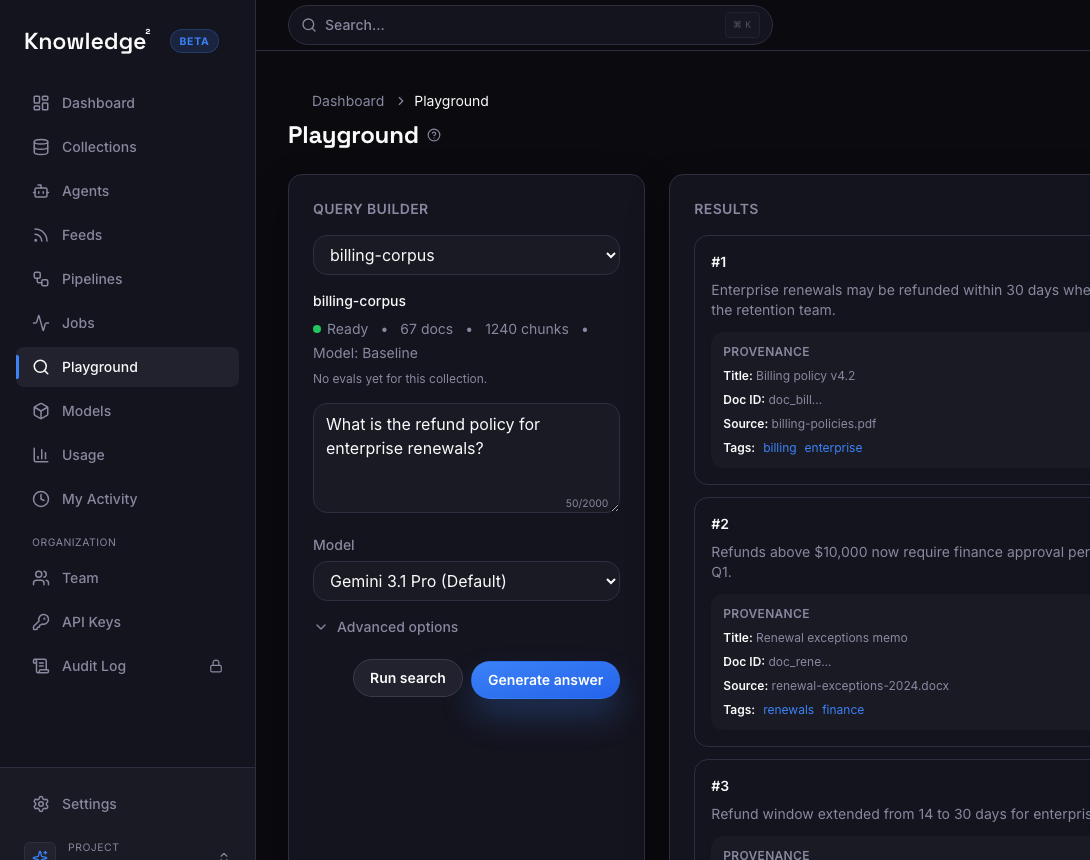
Playground search with scored results and document provenance
02

Interoperability for agent systems

  • Support agent-to-agent retrieval and ingestion workflows where they add product value
  • Expose corpora to more complex orchestration patterns
  • Use interoperability as an extension of the platform rather than the entry point
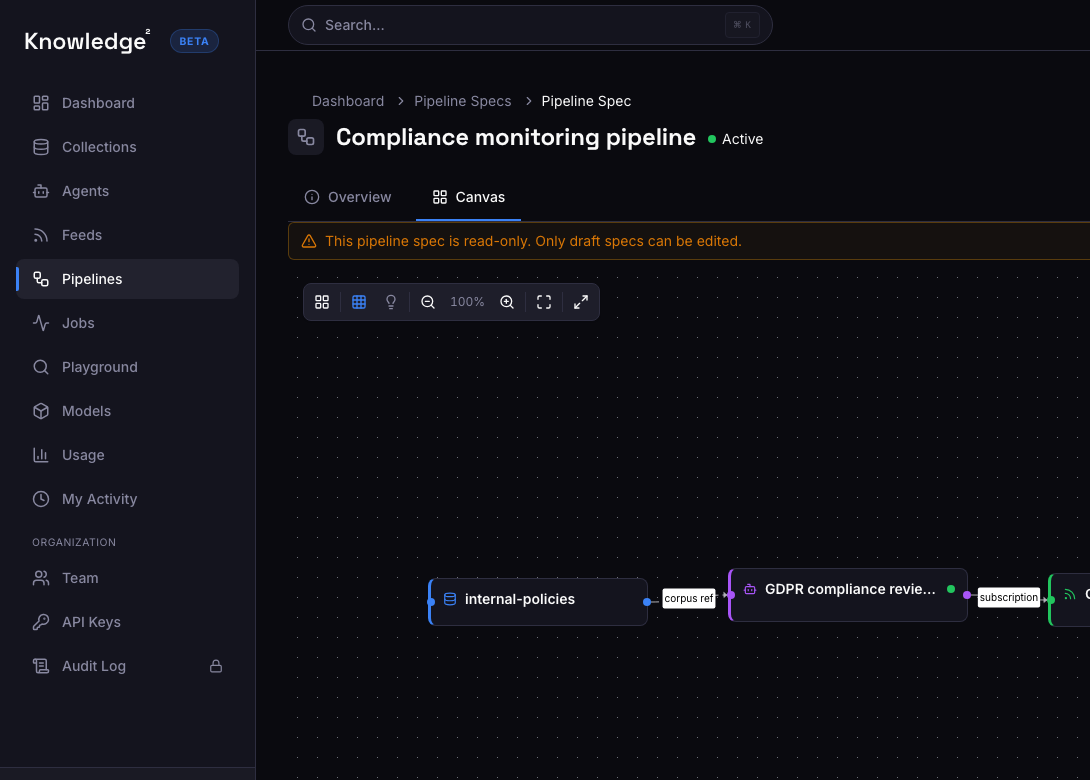
Pipeline topology connecting corpora, agents, and feeds
03

Deeper optimization loops

  • Build training data, run tuning jobs, evaluate results, and promote improvements
  • Use richer analysis workflows when quality gains depend on closer inspection
  • Extend beyond baseline rollout only when the use case justifies the added complexity
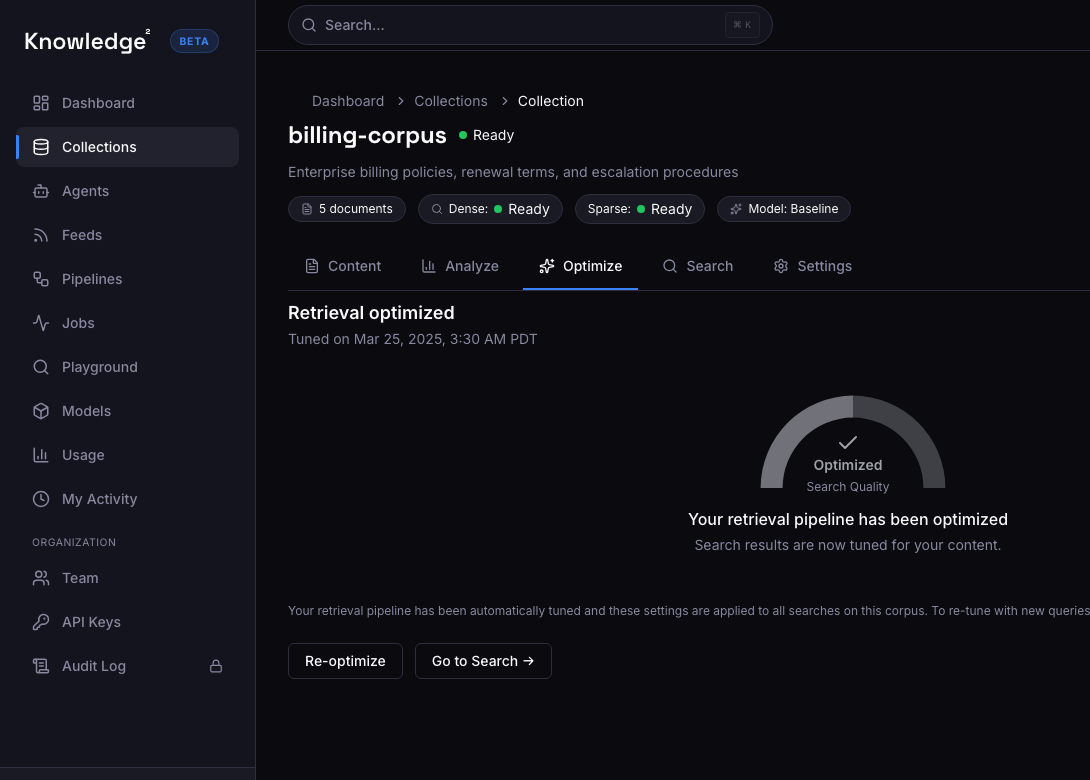
Optimization results showing retrieval quality improvement

What this looks like in a product

Once baseline retrieval works, teams can run deeper optimization loops

Advanced workflows should extend the same platform surface, not force a second stack for evaluation and tuning.

  • Use deeper optimization only where it materially improves the experience.
  • Keep advanced workflows separate from the baseline adoption story.
  • Extend through the same SDK surface instead of a second platform.

Example advanced workflow

A search team tunes for a harder query set instead of stopping at baseline relevance

The platform can support deeper quality work once the first experience is already shipping.

Objective

Improve relevance on relationship-heavy policy questions

Optimization outcome

The team starts a tuning run on real evaluation data, compares it to the current baseline, and only promotes the change if quality improves.

  • Baseline checked before promotion
  • Run status visible to operators
  • No separate tooling required

Implemented with the Knowledge² Python SDK

Keep the implementation surface small

Python SDK example

Python
from sdk import Knowledge2k2 = Knowledge2(api_key="k2_...")training = k2.build_training_data(corpus_id="corp_policy_graph")run = k2.build_and_start_tuning_run( corpus_id="corp_policy_graph", training_data_id=training["id"],)status = k2.get_tuning_run(run["id"])

Illustrative tuning response

JSON
{ "run_id": "tune_208", "status": "running", "baseline_ndcg@10": 0.71, "candidate_model": "fusion-v3"}
  • Cited evidence on every answer
  • Tenant-scoped access controls
  • Audit logging
  • VPC / on-prem deployment
  • SOC 2 readiness

Customer results

31.8% cost reduction per turn. 43-75% less retrieval context.

~$80Kmodeled annual savingsElevataFinancial services